TB-500 (Thymosin Beta-4): A Research Overview
A research-focused overview of TB-500, a synthetic fragment related to Thymosin Beta-4 studied for actin binding and cell-migration pathways.
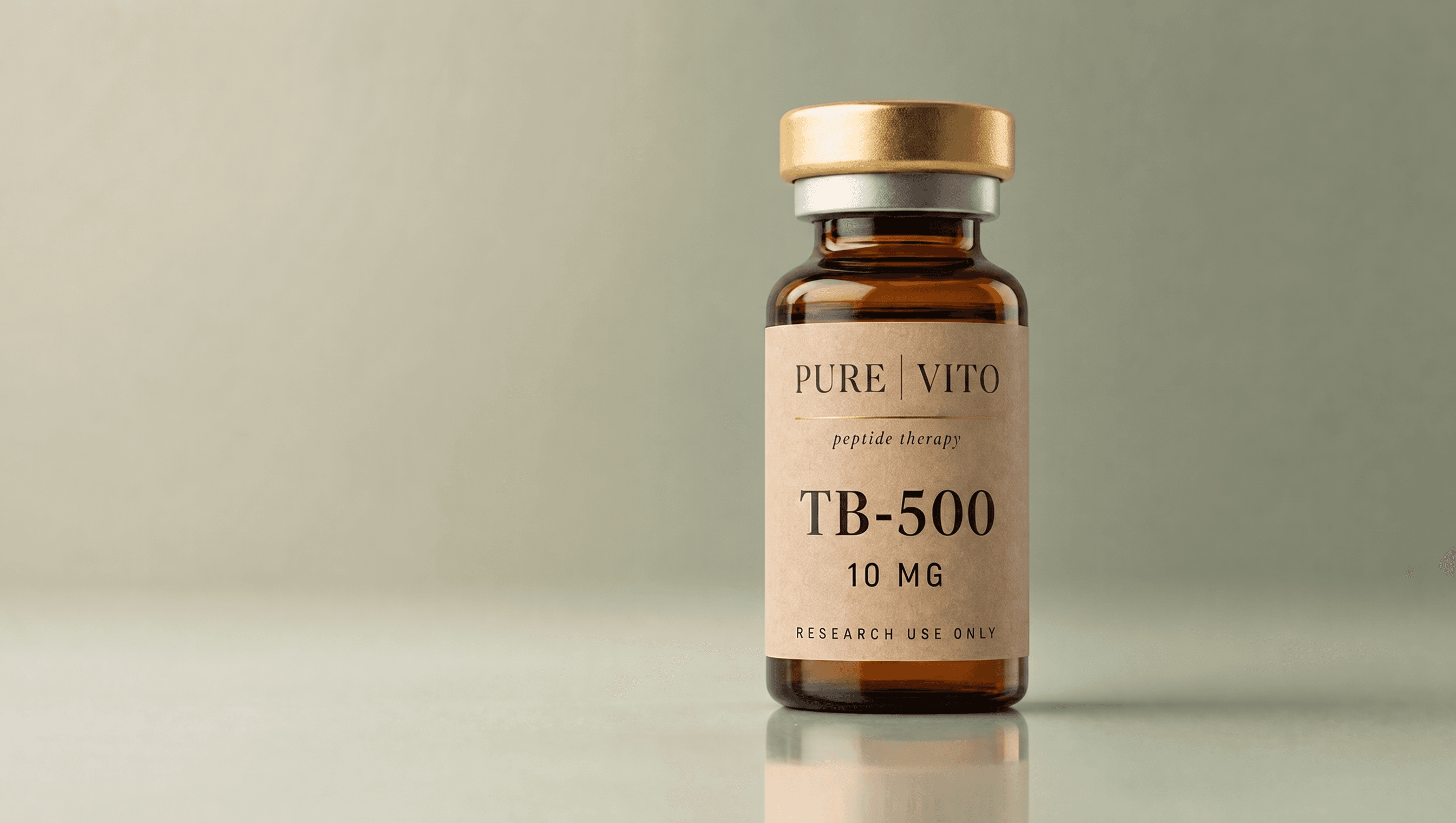
TB-500 is a synthetic peptide widely referenced in preclinical research as a fragment related to Thymosin Beta-4 (TB4), a naturally occurring actin-binding protein. In laboratory models, TB-500 is investigated for its association with cell migration and tissue-repair pathways.
This overview outlines what published research describes about TB-500 within a strict laboratory-use framing. All statements below refer to in-vitro or animal-model observations rather than any human application.
What is TB-500?
TB-500 corresponds to an active region of Thymosin Beta-4, particularly the sequence associated with actin binding. Whereas full-length TB4 is a 43-amino-acid protein present in many tissues, TB-500 is used in research as a shorter synthetic representation of the biologically relevant fragment. This makes it a convenient reference compound for studying actin dynamics.
Mechanism of action: actin regulation
The defining feature of Thymosin Beta-4 biology is its interaction with G-actin. By sequestering actin monomers, TB4 helps regulate the balance between monomeric and filamentous actin, a balance central to how cells change shape and move. Researchers study TB-500 in this context to probe cytoskeletal organisation.
Cell migration and repair models
Because actin dynamics underpin cell motility, preclinical studies have examined whether TB-500 influences the migration of cells involved in tissue reorganisation. Reported observations include effects on endothelial and fibroblast behaviour in vitro, described strictly as experimental findings.
Research context: what studies show
Published work on TB-500 and Thymosin Beta-4 spans in-vitro assays and animal models, including studies of dermal repair, cardiac tissue models and corneal models. Across this literature, TB-500 is treated as an investigational subject, and outcomes depend heavily on model system and methodology. It has not been approved as a therapeutic by any regulatory authority.
Handling and storage
Lyophilised TB-500 is typically stored frozen, sealed and shielded from light and moisture. Once reconstituted for laboratory use, solutions are generally refrigerated and used within a limited period. A peptide reconstitution calculator supports consistent concentrations across replicate experiments.
- Keep lyophilised powder frozen and tightly sealed.
- Reconstitute with a suitable sterile diluent for laboratory work.
- Minimise freeze-thaw cycles to preserve peptide integrity.
Purity and quality
Consistent research outcomes require well-defined material. Purity is commonly verified by HPLC and identity confirmed by mass spectrometry. Consulting third-party lab results before purchase helps ensure a batch matches your specification. Comparing related research peptides can also help identify appropriate reference standards.
Key takeaways
- TB-500 is a synthetic fragment related to Thymosin Beta-4.
- Its central biology involves actin binding and cytoskeletal regulation.
- Preclinical research explores cell-migration and repair pathways.
- Findings are from in-vitro and animal models, not human use.
Research use disclaimer
TB-500 is supplied for in-vitro laboratory research use only. It is not intended for human or veterinary use, diagnosis, or treatment, and it is not a medicine. Nothing in this article constitutes medical advice or a recommendation for use in humans.
About this topic
Compiled by
Scientific basis
Based on peer-reviewed scientific literature and research data.
Last reviewed
21 August 2026