Peptide Storage and Handling: A Complete Lab Guide
A practical peptide storage guide: keep lyophilised powder frozen and dry, avoid freeze-thaw cycles, aliquot solutions and protect samples from light.
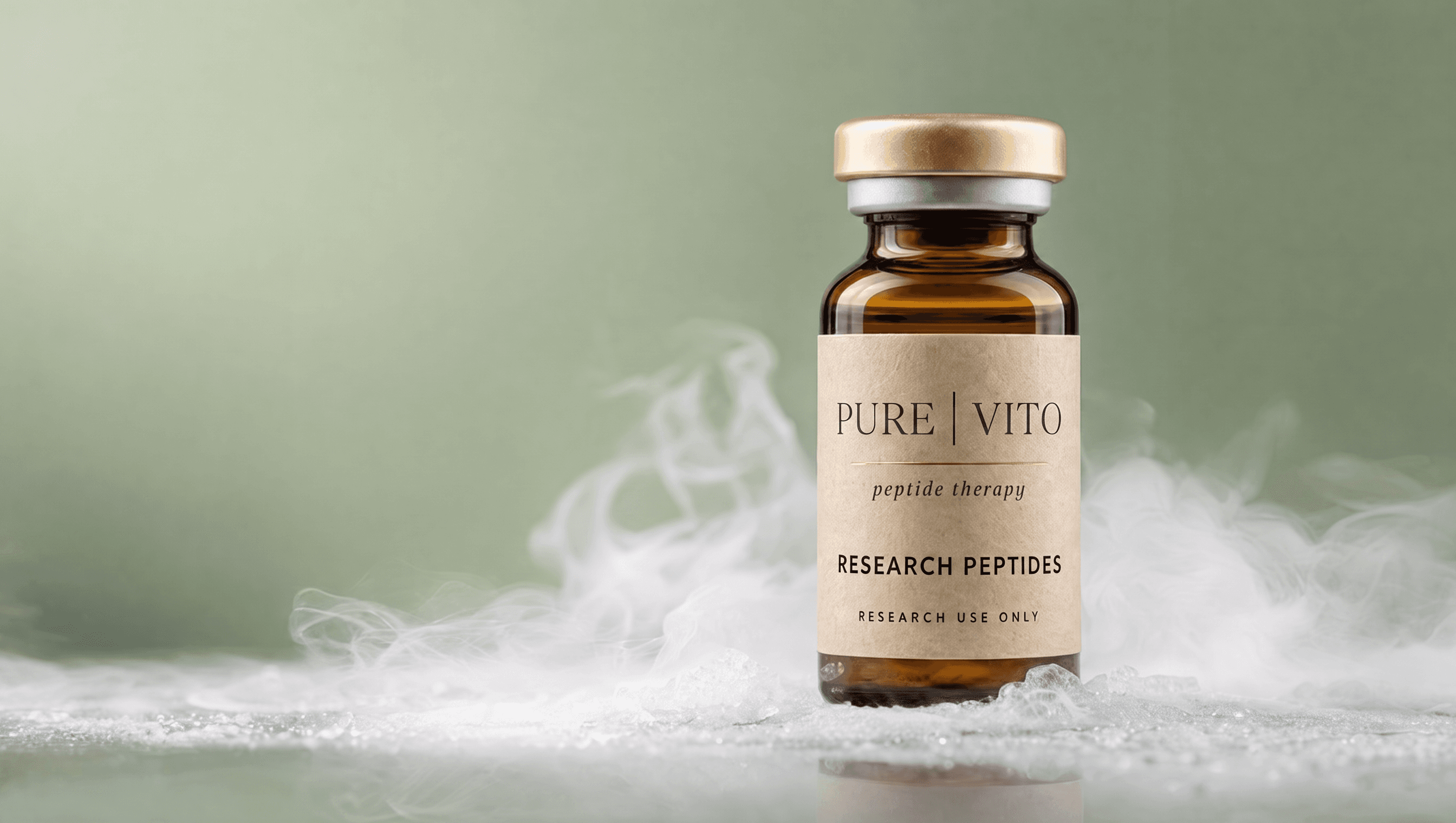
Correct peptide storage is what stands between a well-characterised reference material and a degraded sample that ruins an assay. Peptides are sensitive to heat, moisture, light and repeated freezing, so the way you store and handle them in the lab directly affects their stability and shelf life.
This guide sets out best-practice peptide storage and handling for both lyophilised powder and reconstituted solutions.
Storing lyophilised peptide powder
In freeze-dried form, peptides are at their most stable. Good peptide storage for powder means keeping it cold, frozen and desiccated:
- Store at −20 °C for routine use, or −80 °C for long-term archival.
- Keep the vial sealed with its desiccant to exclude atmospheric moisture.
- Return the vial to the freezer promptly after each handling.
Why moisture and temperature matter
Water and warmth accelerate hydrolysis and aggregation, the main routes by which peptides lose integrity. Letting a cold vial warm to room temperature before opening prevents condensation from forming inside, which would introduce moisture into the powder. Always equilibrate a sealed vial before breaking the seal.
Avoiding freeze-thaw cycles
Each freeze-thaw cycle stresses a peptide and can cause cumulative degradation. To minimise cycles:
- Aliquot reconstituted solution into single-use volumes before freezing.
- Thaw only the aliquots you need for a given experiment.
- Never refreeze a fully thawed working aliquot repeatedly.
Handling reconstituted solutions
Once in solution, peptides are less stable than the dry powder. Refrigerate at 2–8 °C, protect from light, and use within the window noted on the third-party lab results or COA. For longer holds, freeze aliquots. If you are preparing a fresh solution, follow correct reconstitution technique and record the concentration.
Light protection and labelling
- Use amber vials or wrap containers to shield light-sensitive peptides.
- Label every vial with identity, lot, concentration and date.
- Keep a simple inventory so older aliquots are used first.
Cold-chain shipping and receiving
Peptides ship on the cold chain, often with ice packs or gel, to limit temperature excursions in transit. On arrival, inspect the package, confirm the material is still cold, and move it into appropriate storage without delay. Check the incoming research peptides against their documentation before logging them into inventory.
Key takeaways
- Store lyophilised powder cold, frozen and desiccated.
- Equilibrate sealed vials before opening to avoid condensation.
- Aliquot to avoid repeated freeze-thaw cycles.
- Refrigerate reconstituted solutions, protect from light and label clearly.
- Respect the cold chain from shipping to storage.
Research use disclaimer
The storage and handling practices described here apply to materials intended for in-vitro laboratory research use only. These materials are not for human or veterinary use, are not a medicine, and must not be consumed or administered to any living organism. Handling is the responsibility of qualified research personnel.
About this topic
Compiled by
Scientific basis
Based on peer-reviewed scientific literature and research data.
Last reviewed
21 August 2026