Bacteriostatic Water Explained: A Lab Handling Guide
What bacteriostatic water is, how it differs from sterile water, and why labs use it to reconstitute research peptides for multiple withdrawals.
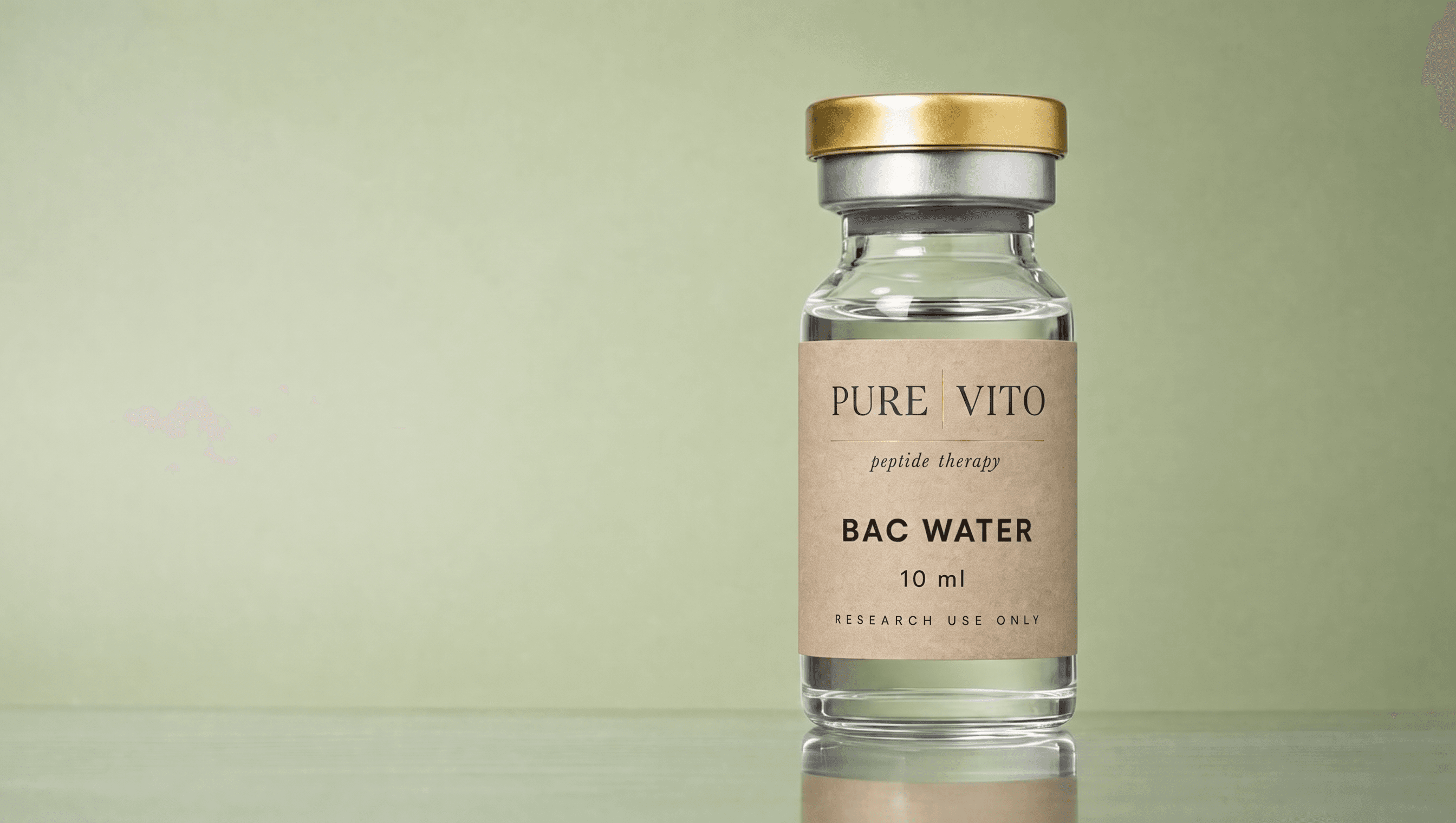
Bacteriostatic water is one of the most common solvents on a peptide research bench, yet its exact nature is often misunderstood. In short, it is sterile water containing a small amount of a bacteriostatic agent that inhibits the growth of bacteria, which makes it well suited to reconstituting materials that will be sampled more than once.
This guide explains what bacteriostatic water is, how it compares with other water grades, and why it is the default diluent for many research peptide workflows.
What is bacteriostatic water?
Bacteriostatic water is sterile water for injection with 0.9% benzyl alcohol added. The benzyl alcohol acts as a bacteriostatic preservative: it does not sterilise, but it suppresses bacterial multiplication, so the water can be entered several times with a lower risk of microbial growth between withdrawals.
How it differs from sterile water (SWFI)
- Sterile water for injection (SWFI) contains no preservative. It is intended for single use, because once the seal is broken there is nothing to inhibit contamination.
- Bacteriostatic water contains benzyl alcohol, allowing multiple entries into the same vial over its labelled in-use period.
- Plain distilled or deionised water is not sterile and is unsuitable as a reconstitution diluent.
Why labs use it for reconstitution
Research reconstitution often draws several aliquots from one vial of peptide over days or weeks. A preservative-containing diluent like bacteriostatic water reduces the chance that repeated needle entries introduce organisms that proliferate in solution. That makes it the practical default for multi-use reconstitution of lyophilised reference materials, unless the COA specifies otherwise.
When another diluent is specified
Some peptides are more soluble or more stable in a different medium, such as acetic acid, sterile water or a buffered solution. Always follow the third-party lab results or COA for a given lot. If it names a specific diluent, use that instead of bacteriostatic water.
Using bacteriostatic water correctly
- Wipe the stopper with an alcohol swab before each entry.
- Add the water slowly down the vial wall and swirl gently to dissolve the peptide.
- Work out the concentration as mg peptide ÷ mL solvent when preparing your research peptides.
- Refrigerate the reconstituted vial and protect it from light.
Storage of bacteriostatic water
- Store at room temperature unless the label states otherwise.
- Note the date first opened and observe the labelled in-use window.
- Discard if the solution is cloudy, discoloured or past its in-use period.
Key takeaways
- Bacteriostatic water is sterile water with 0.9% benzyl alcohol.
- The preservative suits multi-use reconstitution, unlike single-use SWFI.
- Always defer to the COA if a different diluent is specified.
- Keep entries clean, then refrigerate and protect the reconstituted vial from light.
Research use disclaimer
The information here concerns solvents and materials for in-vitro laboratory research use only. These materials are not for human or veterinary use, are not a medicine, and must not be consumed or administered to any living organism. Handling is the responsibility of qualified research personnel.
About this topic
Compiled by
Scientific basis
Based on peer-reviewed scientific literature and research data.
Last reviewed
21 August 2026