MOTS-c Research Overview: A Mitochondrial Peptide
A research-focused overview of MOTS-c, a mitochondrial-derived peptide studied in metabolic-regulation research, with mechanism, handling and purity notes.

MOTS-c is a mitochondrial-derived peptide (MDP) that has attracted significant interest in laboratory research on cellular metabolism. Encoded within the mitochondrial genome, MOTS-c is studied as a signalling molecule in metabolic-regulation research alongside other research peptides. This overview summarises published findings for scientific and educational context only.
The content below is not medical, veterinary or dosing guidance. Every statement refers to controlled laboratory and preclinical investigation rather than any human use.
What is MOTS-c?
MOTS-c (mitochondrial open reading frame of the 12S rRNA type-c) is a short peptide of 16 amino acids encoded by a small open reading frame within mitochondrial DNA. It belongs to the emerging class of mitochondrial-derived peptides. In research literature, MOTS-c is described as a molecule that appears to communicate metabolic status between mitochondria and the rest of the cell, which is why it is often called a mitochondrial signalling peptide.
Mechanism of action
In experimental models, MOTS-c has been associated with activation of the AMP-activated protein kinase (AMPK) pathway, a central regulator of cellular energy balance. Studies also report that under metabolic stress MOTS-c can translocate to the nucleus and influence the expression of stress-response and metabolic genes. These observations position MOTS-c as a research tool for probing how mitochondria participate in whole-cell metabolic regulation.
Metabolic signalling in research contexts
Reported effects on AMPK signalling and glucose-related pathways in cell and animal models make MOTS-c a compound of interest for studying energy metabolism, though these remain experimental observations.
Research context
Preclinical studies have examined MOTS-c in relation to metabolic homeostasis, insulin-related signalling in model systems and cellular responses to metabolic stress. Some ageing-related research has explored MOTS-c as a mitochondrial signalling factor. These are findings within defined experimental systems and do not establish any human benefit. Laboratories frequently consult third-party lab results to confirm identity before study work.
Handling and storage
MOTS-c is generally supplied as a lyophilised powder. Common laboratory practice stores the sealed powder frozen (around -20 C), protected from light and moisture, with reconstituted solutions refrigerated and used within a limited period. Repeated freeze-thaw cycles are typically avoided to preserve peptide integrity. A peptide reconstitution calculator can help plan solvent volumes accurately for experiments.
- Store lyophilised powder cold, dry and dark.
- Reconstitute with a suitable sterile solvent.
- Aliquot to minimise freeze-thaw cycles.
Purity and quality
Reliable metabolic research depends on well-characterised peptide material. Analytical methods such as HPLC and mass spectrometry are used to verify the identity and purity of MOTS-c. Reviewing a certificate of analysis and independent testing helps laboratories ensure that observed effects reflect MOTS-c rather than impurities or degradation products.
Key takeaways
- MOTS-c is a mitochondrial-derived peptide encoded within mitochondrial DNA.
- It is studied in metabolic-regulation research, notably around the AMPK pathway.
- Reported nuclear translocation links it to metabolic gene expression in models.
- Cold, dry, dark storage and purity verification support reproducibility.
- All described effects are experimental observations, not human outcomes.
Research use disclaimer
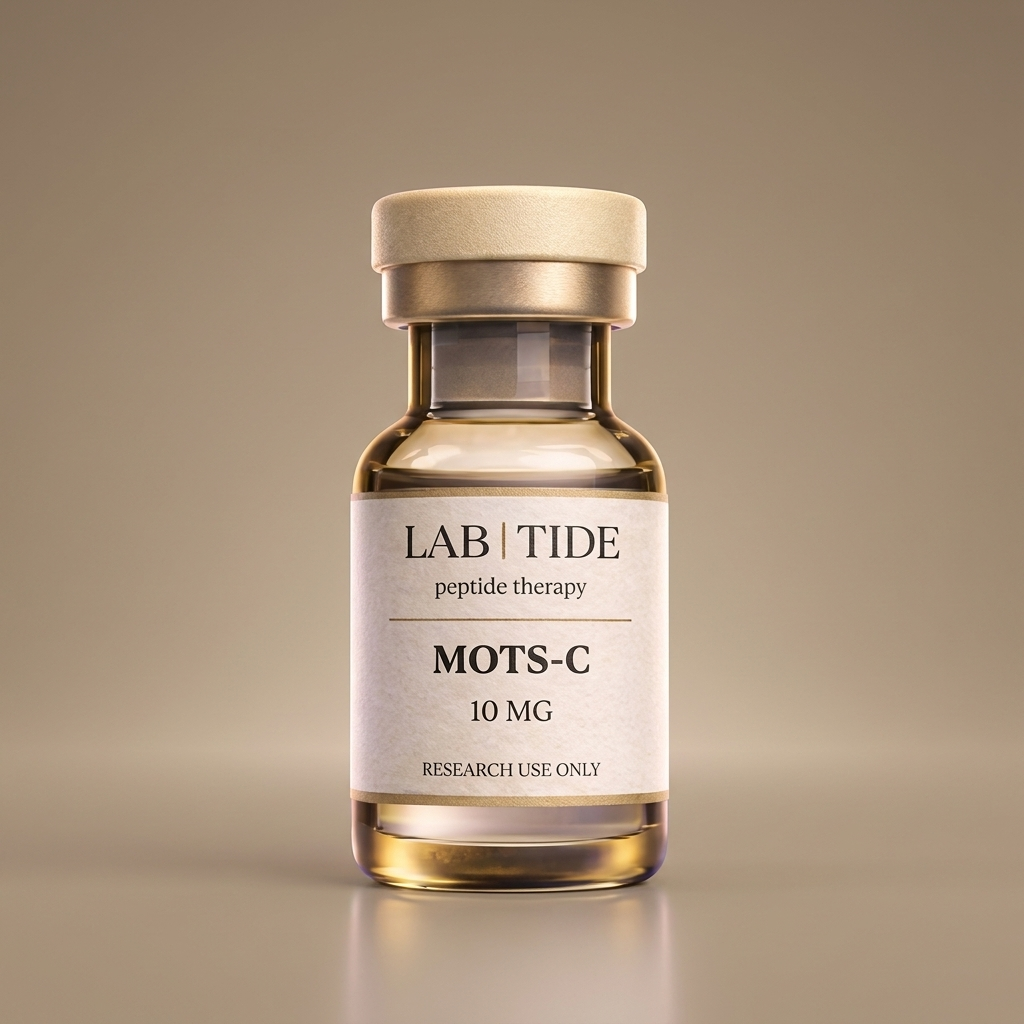
MOTS-c is supplied for laboratory research use only. It is intended for in-vitro laboratory research and is not for human or veterinary use, not for consumption, and not a medicine. Nothing here is medical or dosing advice. For laboratory research use only; not for human consumption.
About this topic
Compiled by
Scientific basis
Based on peer-reviewed scientific literature and research data.
Last reviewed
21 August 2026